Reading electric vehicle specs: power output and battery size
If you’ve started to look into EVs for your fleet, you may be encountering some new terms that describe electric vehicle battery size, power output and efficiency. Here we simplify some of the specifications that might be new to you, and match them up with their equivalents in internal combustion engine (ICE) vehicles.
EV power (kW, not horsepower)
As you read about EVs, you will see kW, or kilowatts, in addition to horsepower. Both mean the same thing: power output.
The term horsepower comes from back when car builders were trying to explain engines to people who still got around with actual horses. In an EV, kilowatts keep the measurement for motor output, battery size and charging rates all on the same terms.
That said, like those stagecoach drivers from a century ago, not all EV buyers are comfortable working with kW just yet, so automakers will often still list horsepower figures. A quick conversion gets you to whichever figure you need.
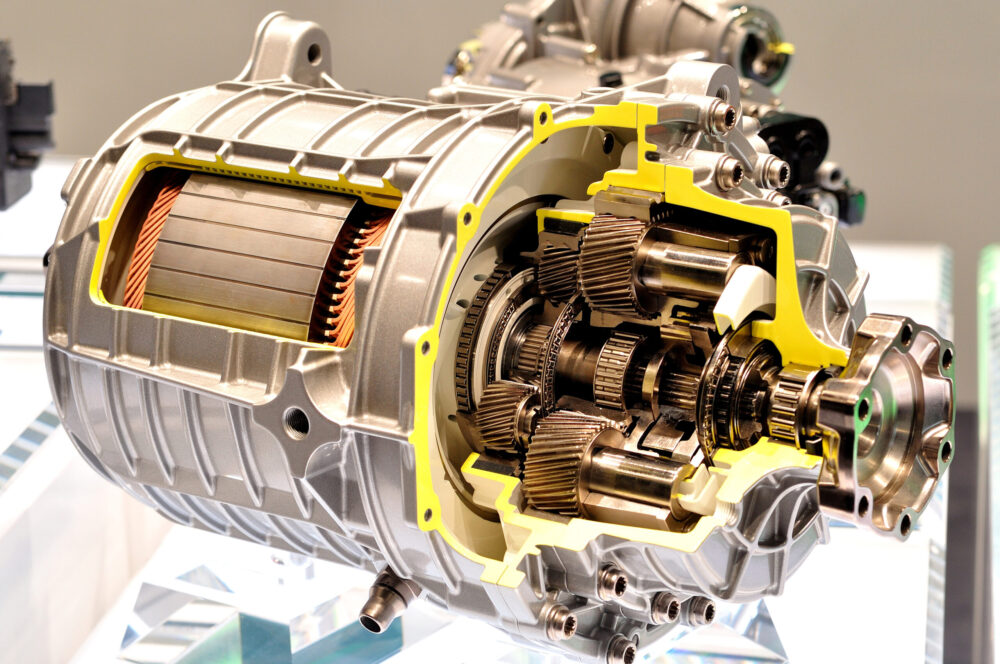
For electric vehicles, kW represents the amount of power that the drivetrain can deliver to the wheels to propel the vehicle.
Torque is still expressed in the same terms: Newton-metres (Nm) in metric, or pound-feet (lb-ft) in imperial measurements. In Canada, we typically use lb-ft.
EV efficiency (kWh or Le per 100km, not litres)
A kilowatt-hour is a way to measure energy: It’s the amount of electricity required to power one 1,000-watt appliance for one hour, or 1,000 one-watt appliances for one hour. In electric vehicles kWh is used to show how much energy a battery can store, and how much energy is required to propel the vehicle for 100 km (kWh/100 km).
You’re probably used to working with fuel consumption in litres per 100 kilometres (L/100 km). With EVs, two different measurements can be used.
One is litres-equivalent per 100 kilometres, or Le/100 km. Natural Resources Canada uses this to express an EV’s energy use in the same terms as a combustion vehicle, with a conversion of 8.9 kWh as the energy equivalent of one litre of gasoline.1 This is useful for understanding EV energy use relative to a combustion counterpart, but it doesn’t help with calculating costs.
To do that, you’ll want to use the other measurement, which is kWh/100 km. This tells you how many kilowatt-hours of power an EV will use to travel 100 kilometres. Once you know how much you’re paying per kWh for energy, this measurement is just as useful to you as L/100 km. It’s the one you’ll refer to most often when working on your budgets.
Electric vehicle battery size (kWh, not litres)
Electric vehicle battery size is expressed in terms of how much power the battery will hold, just like the litres in a fuel tank. The vehicle’s stated range is obtained by dividing the battery capacity by the efficiency rating. The bigger the battery, the further an EV can go on a single charge. For the Chevrolet Silverado EV Work Truck, the Max Range battery pack (205 kWh) can go up to 790 km, versus 480 km for the standard range 119 kWh battery pack. However, just like in a combustion vehicle, there’s more to this: driving style, outside temperature, road conditions, towing and payload demands, and more can affect real-world range. But this figure is a good baseline for comparing range between EVs with similar specifications.
Side by side: the Chevrolet Silverado EV WT and 1500 WT (ICE)
| Chevrolet Silverado EV WT | Chevrolet Silverado 1500 WT (ICE) | |
| Horsepower 2 | 510 hp (dual motor) | 310 hp (2.7L I-4) |
| Torque 2 | 615 lb-ft | 430 lb-ft |
| Towing 3 | 8,500 lbs. (3,855 kg) | 9,500 lbs. (4,309 kg) |
| Payload2 | 2,350 lbs (1,065 kg) | 2,030 lbs. (920 kg) |
| Fuel Consumption 4 | 3.5 Le/100km | 12.8 L/100 km |
| Fuel Tank / Battery Capacity 2 | 119 kWh | 90.8 L |
| Cost to Refuel (Toronto prices, May 2026)5 | $16.89 @ $0.142/kWh (tiered, commercial) | $160.35 @ $1.766/L (regular unleaded) |
| Estimated range on a full tank / charge 4, 6 ✻ | 460 km | 722 km |
✻ Targeted range based on analytical projection consistent with Government of Canada approved US EPA Drive Cycle. Actual range varies with conditions such as external environment, vehicle use, vehicle maintenance, lithium-ion battery age and state of health.
Next up: Learn about EV charging speeds and charging connector plugs.
1 NRCAN Fuel Consumption Guide
2 Current Chevrolet Silverado specifications: EV WT / 1500 WT
3 Chevrolet Silverado 1500 Towing and Payload Guide
4 Natural Resources Canada Fuel Consumption Ratings Search Tool
5 Monthly average retail prices for gasoline and fuel oil, by geography
6 Electric Rates | Ontario Energy Board