Choosing your charging hardware
When purchasing charging hardware, keep in mind that each vehicle has its own limit on the rate of AC and DC charge that it can accept. For example, a Hyundai IONIQ 5 has an 11.5 kW charging capacity for Level 2 charging, while the Audi E-tron has a maximum 9.6 kW. The 2025 Ford e-Transit has an onboard charger capable of 19.2 kW. And many EVs have a maximum DC charge capability of 115 kW. (All commercial charging hardware will self-adjust to the vehicle’s capacity.)
Charging speeds and electrical supply
In EVs, faster charging isn’t necessarily better. When choosing hardware you’re considering the distance the vehicle will travel each day, the time available for it to be parked and plugged in, the charging speed of the equipment, the charging capacity of the vehicle and the electrical supply needed to power everything.
Here’s a chart that shows charging speeds with kW ratings and amps needed, along with sample times for charging a 2024 or 2025 Ford E-Transit van with the 98 kWh battery. Note that your amperage at the panel will always need to have a buffer to supply the charging hardware for safety. For instance, to install an 80-amp, 19.2 kW charger, you will need a 100-amp breaker in your panel. (This is an illustration only – note that the onboard charger of any E-Transit van can only charge at a peak power of about 175 kW.)
| Charge speed in kilowatts (kW) | Amps | Breaker size (Amps) | Time to charge 98 kWh battery |
| DC Fast Charge | from 10 to 80 percent | ||
| 180 kW | 230 A | 300 A | 28m1 |
| 120 kW | 153 A | 200 A | 35m* |
| 90 kW | 115 A | 150 A | 46m* |
| 50 kW | 64 A | 80 A | 1h 22m |
| 24 kW | 40 A | 50 A | 2h 54m* |
| Level 2 | from 0 to 100 percent | ||
| 19.2 kW | 80 A | 100 A | 6h 11m |
| 11.52 kW | 48 A | 60 A | 8h 42m* |
| 9.6 kW | 40 A | 50 A | 10h 25m* |
| 7.68 kW | 32 A | 40 A | 14h 20m |
1 The 89 kWh e-Transit’s DC charging is limited to a peak of ~175 kW; times on higher-rated chargers reflect that ceiling, not the charger’s rated output.
Notes: 1) Sample electrical architecture – requirements may vary between specific appliances. 2) The Ford E-Transit van has a battery capacity of 89 kWh, but internal limits on Level 2 and DC charging rates of 19.2 kW and ~175 kW respectively. Sources: ABB; Ford. Unasterisked figures are Ford-published data.
How to make your choice
Fleet operators will likely want to look to Level 2 charging as the primary energy source for light-duty vehicles. These chargers can be installed either at a central depot or at drivers’ homes, and allow fleets to charge during the overnight hours.
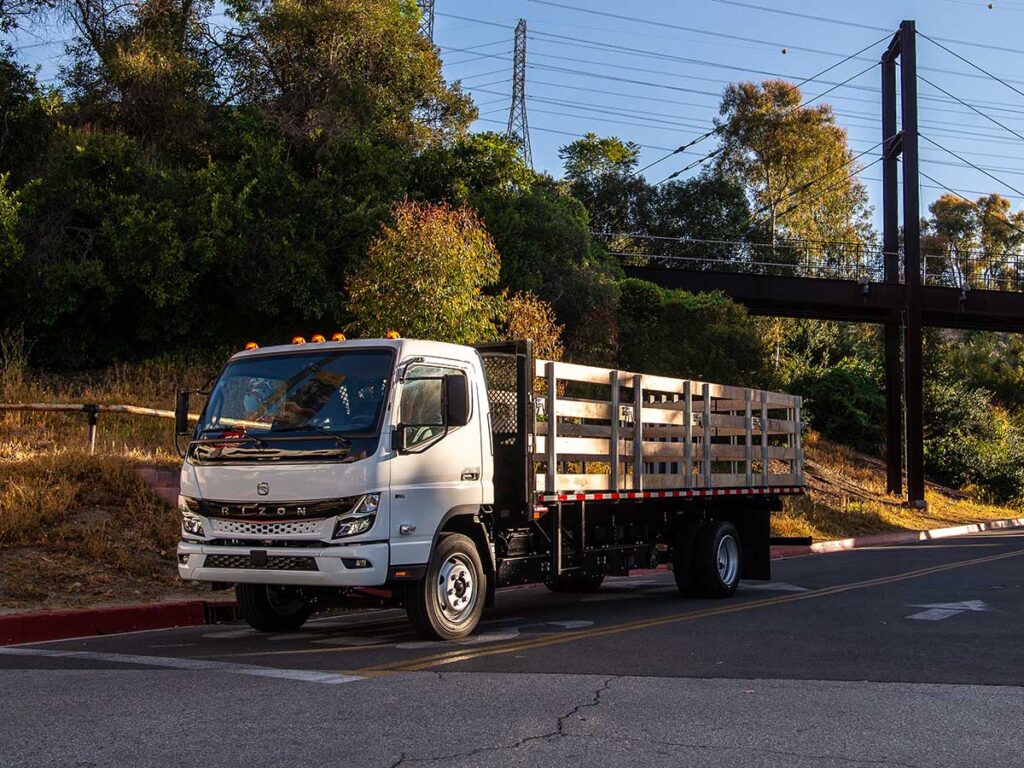
For medium-duty vehicles, such as Class 5 or 6, or heavy-duty tractors, some fleets may need to add some DC charging to their plans (DC chargers start at 24kW). “Fleet vehicles will often have larger batteries than typical passenger EVs, requiring even faster charging,” writes charging hardware maker ABB E-Mobility in a recent report. “Consider the math for a 200 kWh battery electric delivery truck. With a typical AC charger rated at 7.4 kW, it may take up to 24 hours to recharge that vehicle. A Destination DC charger brings that charge time down to a more realistic eight hours of overnight charging.” Your fleet vehicle provider may have a ready-made solution for charging to offer when you purchase or lease your new vehicles, but you should not feel obliged to use the manufacturer’s hardware, as long as what you choose is compliant.
In the final topic on charging, learn more about getting the most from managed charging.